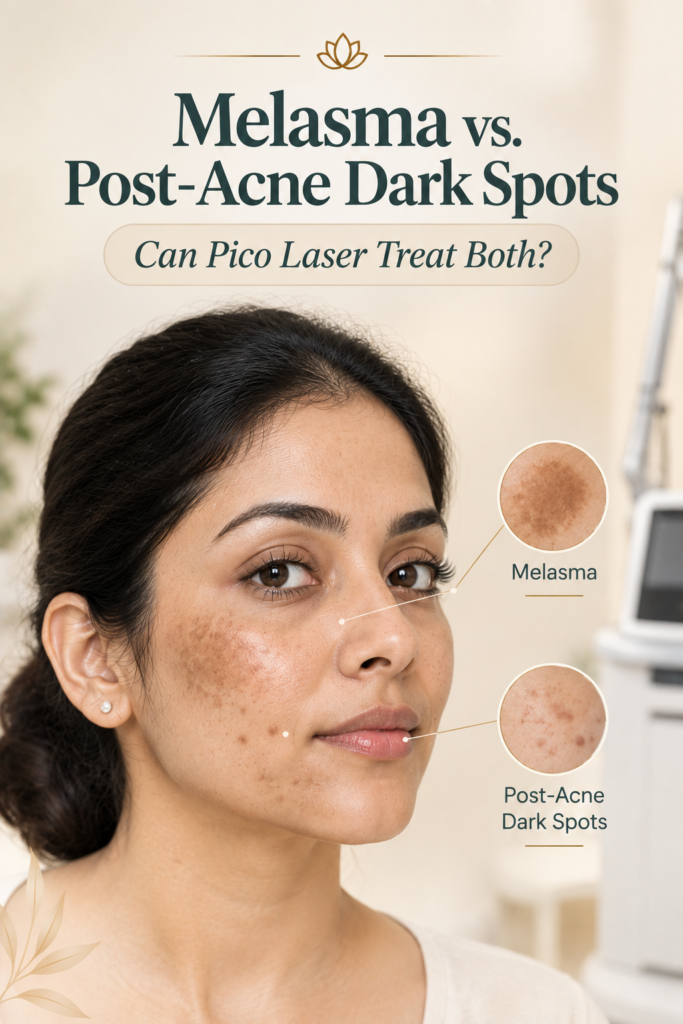
Not every dark patch on the face is caused by the same process, which is why using the same cream or laser treatment for every pigmentation concern may not give the expected result.
Post-inflammatory hyperpigmentation (PIH) usually develops after inflammation or injury such as acne, while melasma is a chronic pigmentary condition commonly associated with hormonal influences, ultraviolet exposure, visible light, heat and genetic susceptibility.
The difference matters because treatment needs to address the underlying pigmentation pattern rather than simply trying to remove visible pigment.
If you’re unsure which type of pigmentation you have, consult a dermatologist to see if Pico Laser for pigmentation in Chennai is right for your skin type.
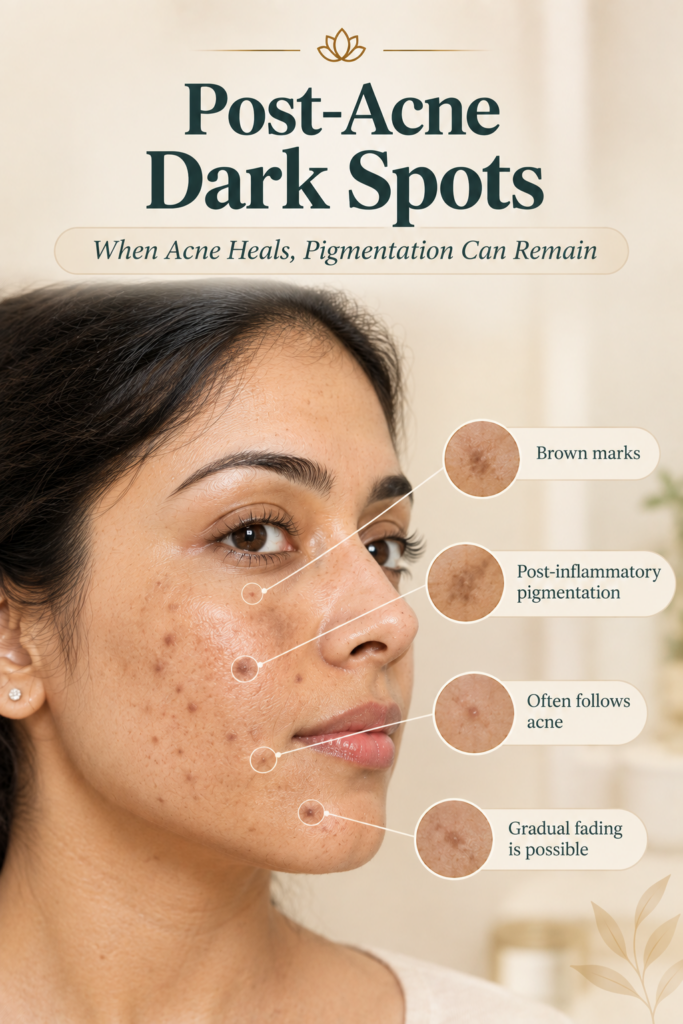
Post-inflammatory hyperpigmentation, or PIH, is the darkening that remains after inflammation or injury to the skin.
For many patients, the trigger is acne. A pimple may disappear, but the brown or grey-brown mark left behind can remain for weeks or months.
PIH can also develop after:
The pigmentation does not necessarily have a uniform depth. Melanin can accumulate within different layers of the skin, so a dermatologist may need to assess the colour, pattern and clinical history before choosing treatment.
Acne pigmentation often:
The important clue is often the history of acne or inflammation in the same area.
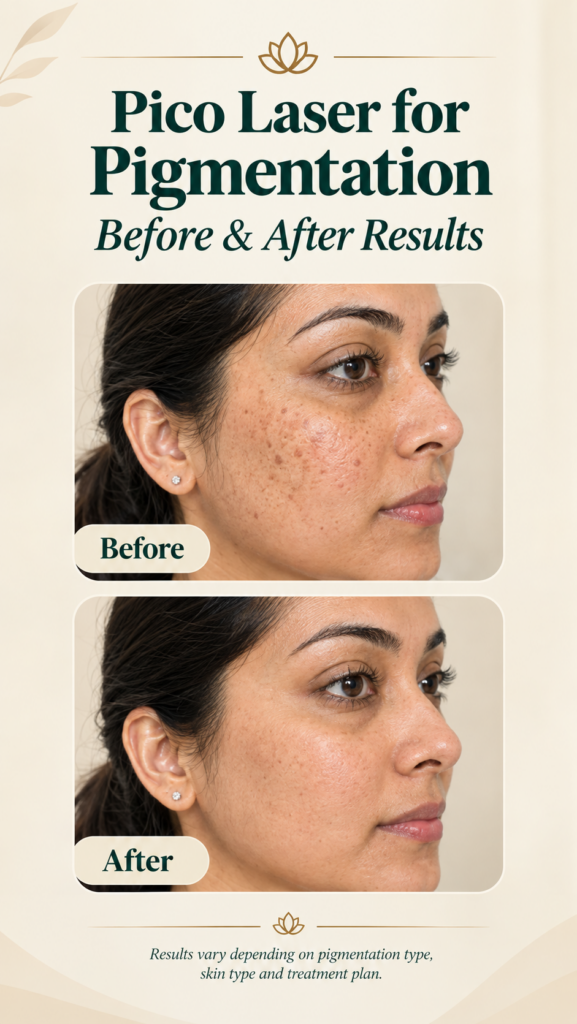
Pico Laser uses extremely short laser pulses to target selected pigment. Picosecond technology is designed to produce a predominantly photomechanical or photoacoustic effect, helping fragment pigment while limiting unnecessary thermal exposure compared with longer pulse approaches.
However, “less thermal” does not mean “no risk of pigmentation.”
In Indian and other darker skin types, treatment still needs carefully selected parameters because the skin contains more melanin and can be more susceptible to treatment-related pigmentary changes.
For suitable patients, Pico Laser may therefore form part of an acne mark pigmentation treatment plan.
The dermatologist may consider:
Treating the acne itself and preventing new inflammation also matters. Otherwise, new acne can continue creating new PIH while older marks are being treated.
Melasma is a chronic acquired pigmentation disorder that usually appears as larger, irregular brown or grey-brown patches on the face.
It commonly affects areas such as:
Unlike acne-related PIH, melasma commonly has a symmetrical pattern.
Its development is multifactorial. Hormonal influences, UV exposure, visible light, heat, genetics and other factors can contribute to its persistence. Indian dermatology consensus recommendations emphasize individualized management, photoprotection and relapse prevention, particularly in skin types III–VI.
Melasma is not simply a collection of pigment sitting on the skin’s surface.
The condition involves ongoing changes in melanogenesis and can be influenced by environmental and biological triggers. This means that reducing visible pigmentation does not necessarily remove the tendency to develop it again.
Sun and visible-light protection therefore remain an important part of management.
For this reason, a dermatologist may combine:
Pico Laser may be considered for selected melasma patients, but melasma needs substantially more caution than a simple isolated dark spot.
Current evidence on laser treatment for melasma remains inconsistent. A 2026 systematic review and meta-analysis found that picosecond lasers did not significantly outperform control treatments overall, while also emphasizing recurrence and the importance of multimodal management and photoprotection.
That means Pico Laser should not be marketed as a guaranteed or permanent cure for melasma.
Instead, it may be used as one component of a dermatologist-led custom management plan when the clinician believes the potential benefits outweigh the risks.
One of the biggest concerns with treating melasma is triggering additional pigmentation through inflammation or excessive thermal injury.
This is particularly relevant for Indian skin.
A treatment that is too aggressive can potentially cause post-inflammatory hyperpigmentation, making the pigmentation problem more difficult to manage.
Picosecond technology can offer a more pigment-targeted approach because of its very short pulse duration, but the device alone does not determine safety.
The treatment parameters matter.
A dermatologist may need to consider:
Recent reviews of energy-based devices in skin of colour similarly emphasize patient selection, parameter optimization and conservative treatment strategies to reduce pigmentary complications.
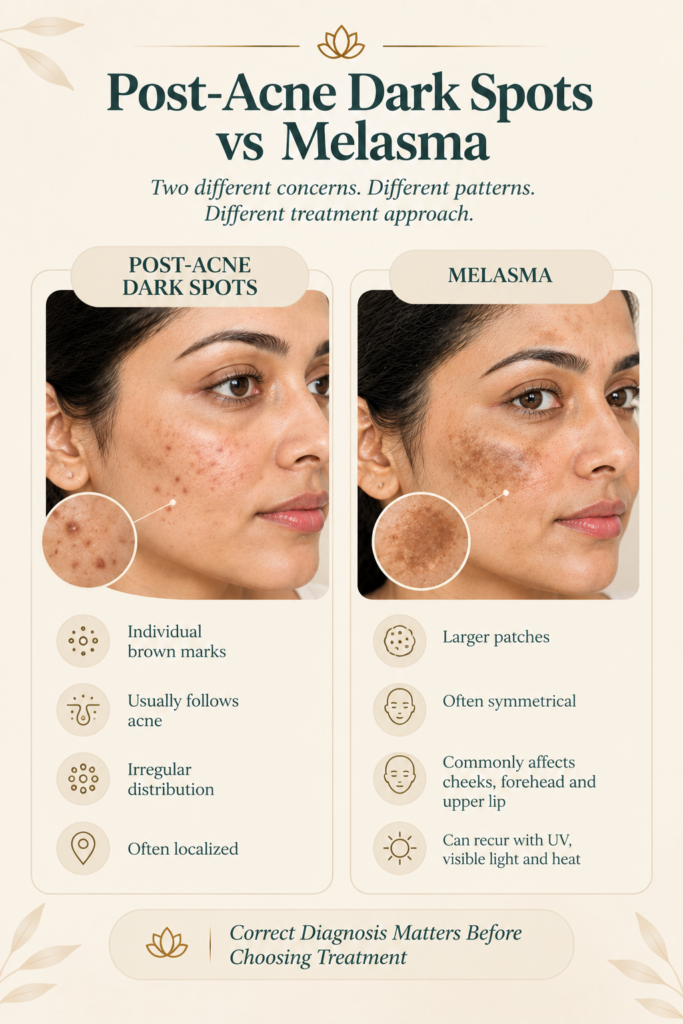
The key difference is that PIH is generally a consequence of previous inflammation, while melasma is a chronic pigmentary disorder with multiple contributing factors.
Indian skin commonly falls within Fitzpatrick skin types III–V, although individual skin tones vary widely.
Higher epidermal melanin content can increase susceptibility to unwanted pigmentary changes after energy-based procedures. Reviews of laser treatment in skin of colour identify PIH as an important complication and emphasize careful device and parameter selection.
This is why the question should not simply be:
“Which laser is best for pigmentation?”
A more useful question is:
“What type of pigmentation do I have, and what treatment can address it without unnecessarily irritating my skin?”
A dermatologist may assess:
1. Pigmentation pattern
Is it symmetrical, acne-related, localized or diffuse?
2. Skin type
Darker skin types require particular attention to treatment-related pigmentation.
3. Pigment depth and appearance
Clinical examination can help determine whether laser treatment is appropriate.
4. Current skin condition
Active acne, inflammation or irritation may need to be addressed first.
5. Previous treatments
Your response to creams, peels, lasers or other procedures can influence the treatment plan.
6. Laser parameters
Wavelength, spot size and energy should be selected according to the individual rather than using a one-setting-fits-all approach.
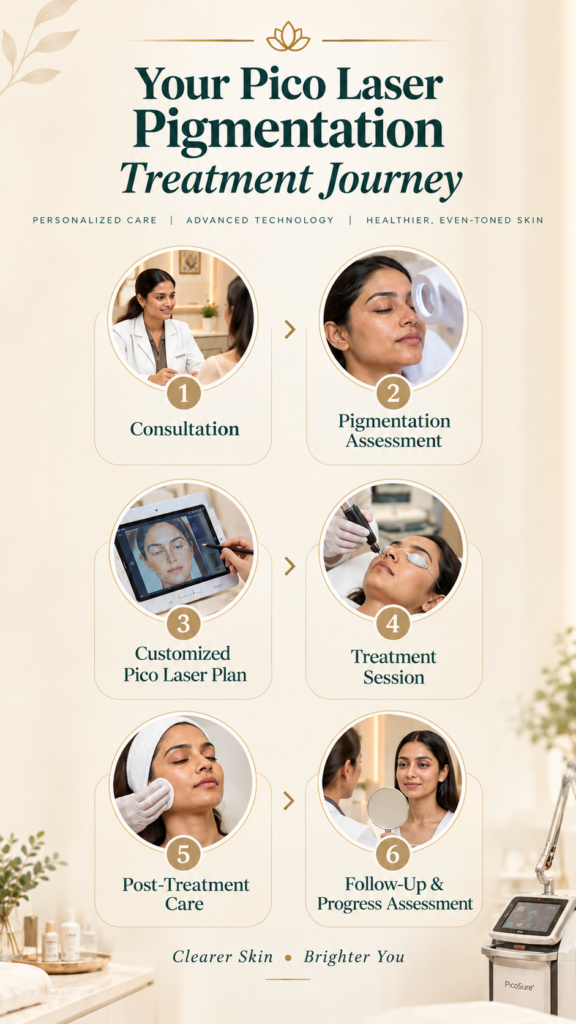
If Pico Laser is considered appropriate, the goal should be controlled pigment improvement, not aggressive removal at any cost.
A typical treatment plan may involve:
Your dermatologist identifies the likely type and cause of pigmentation.
The laser parameters are selected according to the pigmentation and your skin characteristics.
The appearance of pigmentation may improve progressively rather than disappearing immediately after one session.
Sun protection and dermatologist-recommended skincare remain important, particularly for pigmentation-prone skin.
Your response can be assessed before deciding whether additional sessions or another treatment approach is appropriate.
This individualized approach is particularly important because current Indian expert consensus favors tailored and multimodal management of common hyperpigmentation disorders rather than a single universal treatment.
If you are searching for melasma treatment in Chennai, it is important to distinguish melasma from other forms of facial pigmentation before choosing a procedure.
A dark patch that looks like melasma may have another cause, and different pigmentary disorders can overlap clinically. Indian dermatology literature emphasizes careful diagnosis because facial pigmentation disorders can have similar appearances while requiring different management strategies.
For someone searching for a dermatologist for melasma in Nungambakkam, the consultation should focus on diagnosis, triggers, previous treatments, skin type and long-term maintenance—not simply on choosing a laser.
There is no fixed number of Pico Laser sessions that applies to every patient.
Selected superficial or persistent acne pigmentation may respond over a course of treatments, depending on its severity and depth.
Melasma generally requires more careful long-term management because it is recurrent. Laser treatment, when used, may be only one part of the overall plan.
The number and spacing of sessions should therefore be decided after evaluating your skin rather than promising a predetermined result.
Melasma and acne-related PIH have different causes and patterns.
More energy does not automatically mean better results. Excessive inflammation can be counterproductive, particularly in pigment-prone skin.
Photoprotection is a fundamental part of pigmentation management.
New inflammation can create new PIH while existing marks are being treated.
Melasma in particular can recur, and even acne-related pigmentation can return if new inflammation continues.
Pico Laser is not automatically the right treatment for every dark mark.
A dermatologist may recommend another approach if:
A treatment plan can also involve more than one modality.
The goal is to control pigmentation while minimizing unnecessary inflammation and recurrence.
At Venus Skin Clinic, pigmentation treatment is approached as an individualized dermatology concern rather than a one-treatment-fits-all procedure.
Dr. Sharanya Karthik, Cosmetic Dermatologist, has over 11 years of experience and provides dermatologist-led assessment for skin and pigmentation concerns.
Your treatment plan can take into account:
A consultation can help determine whether Pico Laser is appropriate for your particular pigmentation—or whether another treatment would make more sense.
Venus Skin Clinic
4, Nageshwara Road, Nungambakkam, Chennai
Near Child Trust Hospital
Call: +91 777 000 2118
 Pico Laser for Pigmentation in Chennai
 Acne Scars vs. Acne Marks: What’s the Difference & How to Treat Them
 Shaving vs Waxing vs Laser: Which One Causes Dark Underarms?
 Professional Skin Care Clinic Treatments in Chennai for Acne, Pigmentation & Anti-Aging
 Microneedling vs Laser for Acne Scars: Which Treatment Is Better?
 Chemical Peels vs. Laser Treatment: Which Is Better for Acne Scars?
 Does Laser Hair Removal Cause Pigmentation? Dermatologist Explains
 Dermatologist vs Beauty Clinic: Who Should Treat Skin Problems?
 Persistent Itching to Heat Rashes: Understanding Chronic Skin Conditions & How to Treat Them
 Pre and post Hydrafacial skincare routine
 Why Underarms Become Dark in Indian Skin (And How to Fix It Safely)
 ✨ Chemical Peel for Dark Circles in Chennai – Wake Up to Brighter Eyes
