Struggling with stubborn areas of fat, a less-defined body contour or loose skin despite maintaining a healthy lifestyle? Body contouring treatment in Chennai at Venus Skin Clinic offers a consultation-led approach to non-surgical body sculpting, with treatment options selected according to your body concerns, skin condition and goals.
Located in Nungambakkam, Chennai, Venus Skin Clinic helps patients explore non-surgical approaches to selected concerns involving the abdomen, arms, thighs and other areas where localised fullness or skin laxity may affect body contours.
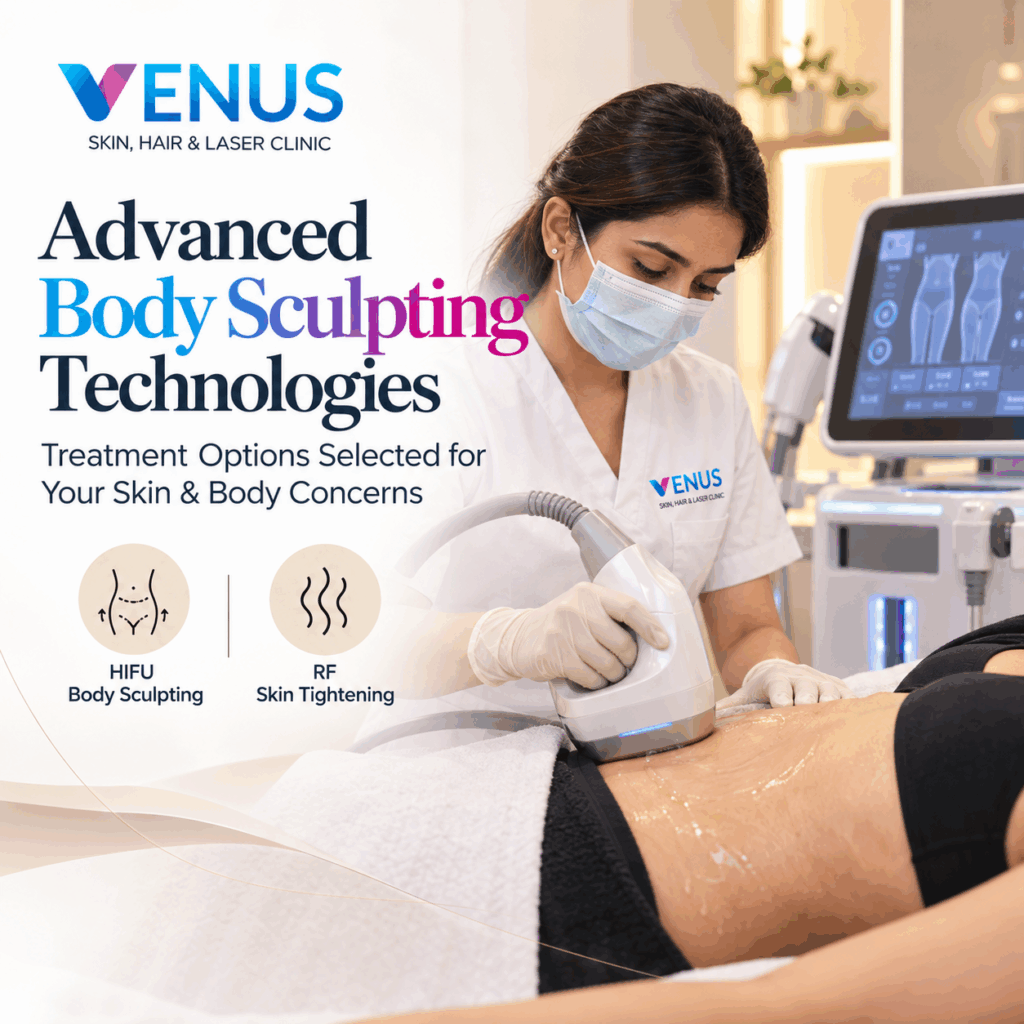
Depending on your suitability and the technology available, options such as body HIFU and radiofrequency (RF) may be considered to address specific contouring or skin-firmness concerns without surgical incisions.
The first step is understanding what you want to improve — localised fat, loose skin or both — so that your treatment plan matches your needs.
At Venus Skin Clinic, your body contouring plan starts with a personalised assessment, realistic expectations and an explanation of the available options.
Book Your Consultation Call +91 777 000 2118
Venus Skin Clinic, 4, Nageshwara Road, Nungambakkam, Chennai — near Child Trust Hospital.
| Treatment detail | What to know |
|---|---|
| Treatment type | Non-surgical body contouring options |
| Technologies | Body HIFU and radiofrequency, subject to device availability and suitability |
| Target areas | Abdomen, arms, flanks, thighs and selected areas of loose skin |
| Session duration | Depends on the device, treatment area and protocol; confirm during consultation |
| Downtime | Often limited with non-invasive procedures, but temporary redness, tenderness or swelling may occur |
| Location | Venus Skin Clinic, Nungambakkam, Chennai |
| Treatment planning | Based on individual assessment and the selected technology |
Treatment availability, device specifications, session duration and expected recovery should be confirmed by the clinic before booking.
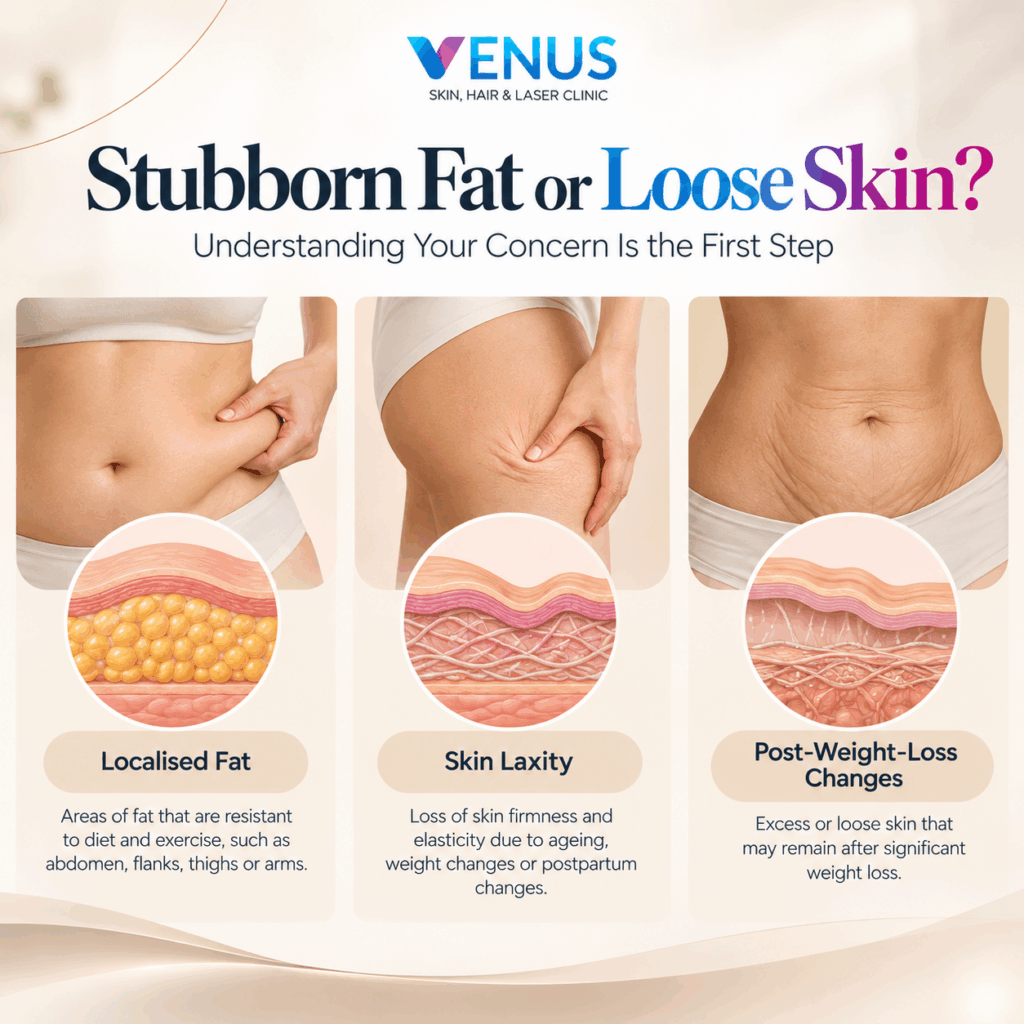
Body shape is influenced by several factors, including genetics, fat distribution, skin elasticity, age, hormonal changes and weight fluctuations. Two people with a similar body weight may have very different concerns: one may have localised fat deposits, while another may be more concerned about loose skin.
Understanding this difference helps determine whether a non-surgical treatment is worth considering.
Subcutaneous fat is the layer of fat beneath the skin. It contributes to normal body shape and can accumulate unevenly in areas such as the lower abdomen, flanks, upper arms and thighs.
Some localised deposits may remain noticeable even when someone follows a balanced diet and exercises regularly. Non-surgical body contouring treatments may be considered for selected areas, but suitability depends on the amount and distribution of fat, the technology used and the patient’s overall health.
These procedures are not substitutes for weight management and should not be presented as treatments for obesity.
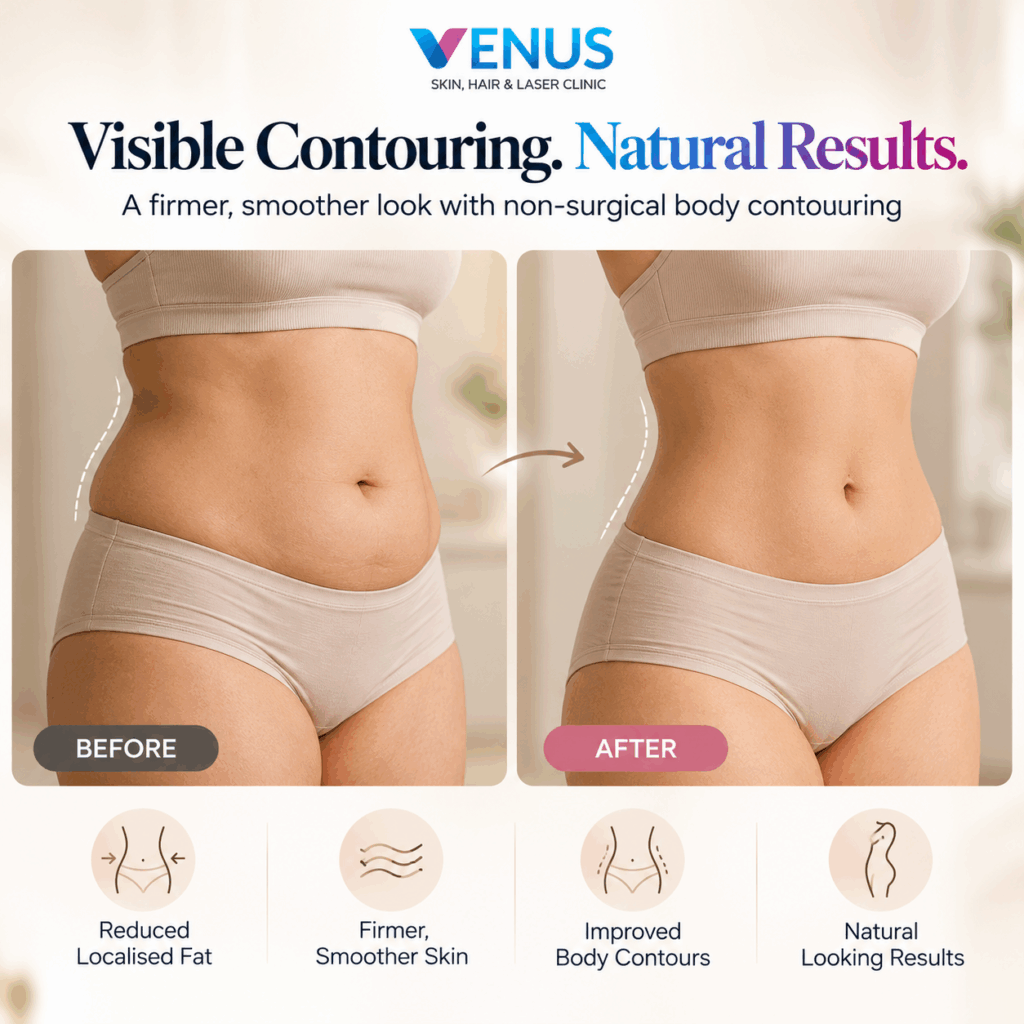
Skin laxity refers to skin that has lost some of its firmness or ability to recoil. It can develop with ageing, changes in collagen and elastin, pregnancy or substantial weight loss.
Crepey skin may look thin, finely wrinkled or less smooth. If skin laxity is the main concern, a treatment intended to target fat may not address it adequately.
Selected radiofrequency technologies are designed to heat tissue and may support improvements in skin firmness over time. Results depend on the device, treatment protocol and degree of laxity.
Body contouring focuses on specific areas and their appearance. It does not replace a comprehensive approach to weight management, which may involve nutrition, physical activity and medical support when appropriate.
Diet and exercise can change body fat and muscle mass, but they do not always correct loose skin or produce the same contour in every area.
If your main concern is excess body weight rather than a small, localised area, a medical weight-management assessment may be more appropriate than starting with body sculpting.
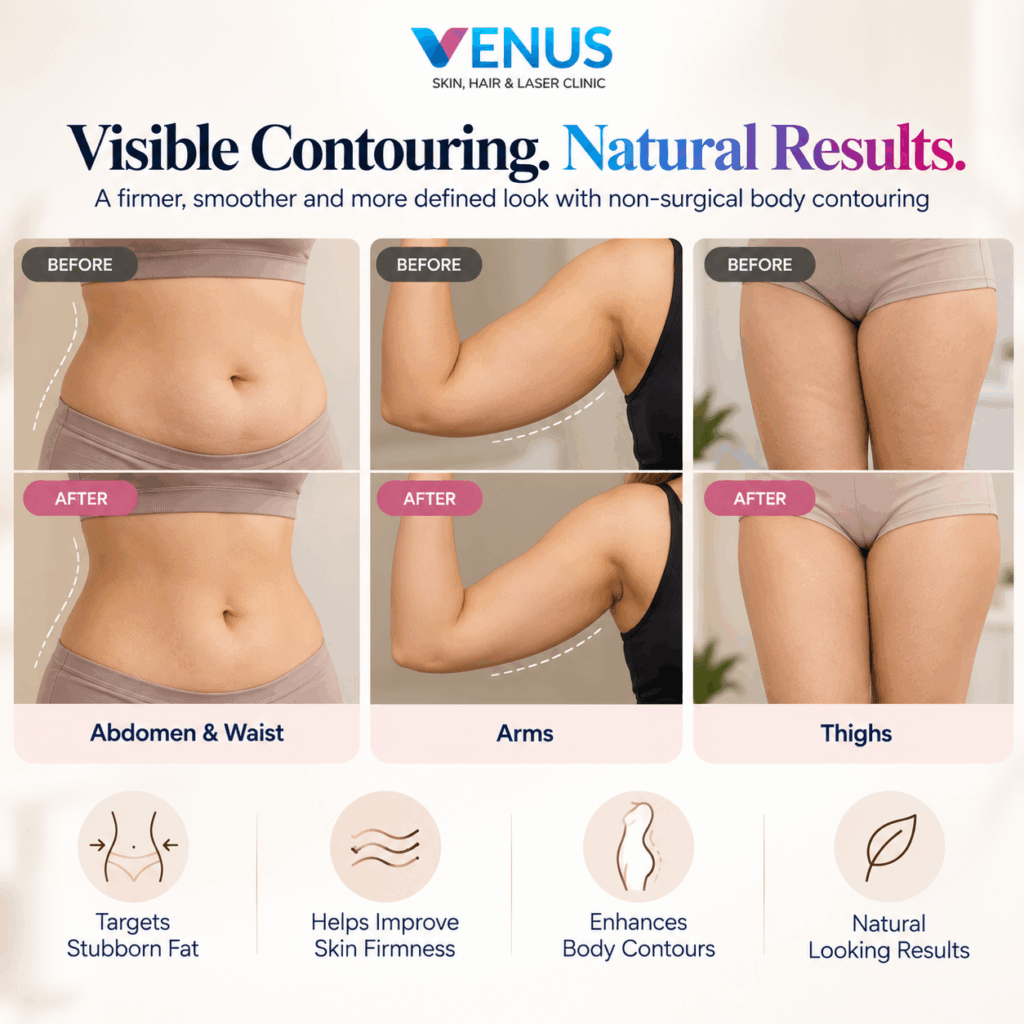
Body contouring after weight loss may be worth discussing if you have reached a relatively stable weight but remain concerned about selected areas of fullness or mild skin laxity.
However, significant excess skin following major weight loss may not respond sufficiently to non-surgical treatments. A clinician can explain whether a non-invasive approach is realistic or whether referral for a surgical opinion would be more appropriate.
Different technologies work in different ways. The right option depends on whether your main concern is localised fat, skin laxity or a combination of both.
At Venus Skin Clinic, body HIFU and radiofrequency may be considered where the relevant technology is available and clinically appropriate. The actual device, approved indications and treatment protocol should be confirmed before treatment.
High-Intensity Focused Ultrasound (HIFU) uses focused ultrasound energy to deliver energy to targeted tissue at selected depths. The way it acts depends on the device design, transducer and treatment settings.
Certain body-contouring HIFU systems are designed to target tissue beneath the skin, while other ultrasound systems have different indications and depths. Not every device marketed as HIFU is suitable for body-fat reduction.
Some body HIFU systems may offer transducers described as 8 mm or 13 mm. These measurements refer to the intended focal depth of a particular transducer, not a universal specification for every HIFU device. The appropriate depth must be based on the device instructions, treatment area, tissue thickness and clinician assessment.
Depending on the specific system and its intended use, treatment may be considered for selected localised body-contour concerns.
Potential goals may include:
Results are not immediate or guaranteed. The amount of change varies, and some patients may not be suitable candidates.
HIFU should not be described as a guaranteed way to eliminate fat, treat obesity or replace liposuction.
Radiofrequency delivers electrical energy that produces heat within targeted tissue. Depending on the device and its settings, this heating may be used for selected aesthetic goals involving skin firmness and texture.
RF body contouring may be considered when skin laxity or a less-firm appearance is a concern. Some systems are designed for body treatments, but their capabilities and indications vary.
Depending on the technology and individual suitability, RF-based treatment may aim to:
RF is not a substitute for removing substantial excess skin. It also does not guarantee a specific amount of fat reduction.
| Consideration | Body HIFU | RF body contouring |
|---|---|---|
| How it works | Focused ultrasound energy delivered at designated depths | Radiofrequency energy creates controlled heating in targeted tissue |
| Potential treatment goal | Selected body-contour concerns, depending on the system | Selected skin-firmness and texture concerns, depending on the system |
| Main consideration | Device-specific indications, focal depth and tissue thickness | Energy delivery, treatment settings, skin condition and safety precautions |
| Is it right for everyone? | No; suitability must be assessed | No; suitability must be assessed |
The technologies are not interchangeable. A clinician should explain the intended benefit, limitations, risks and alternatives before recommending either option.
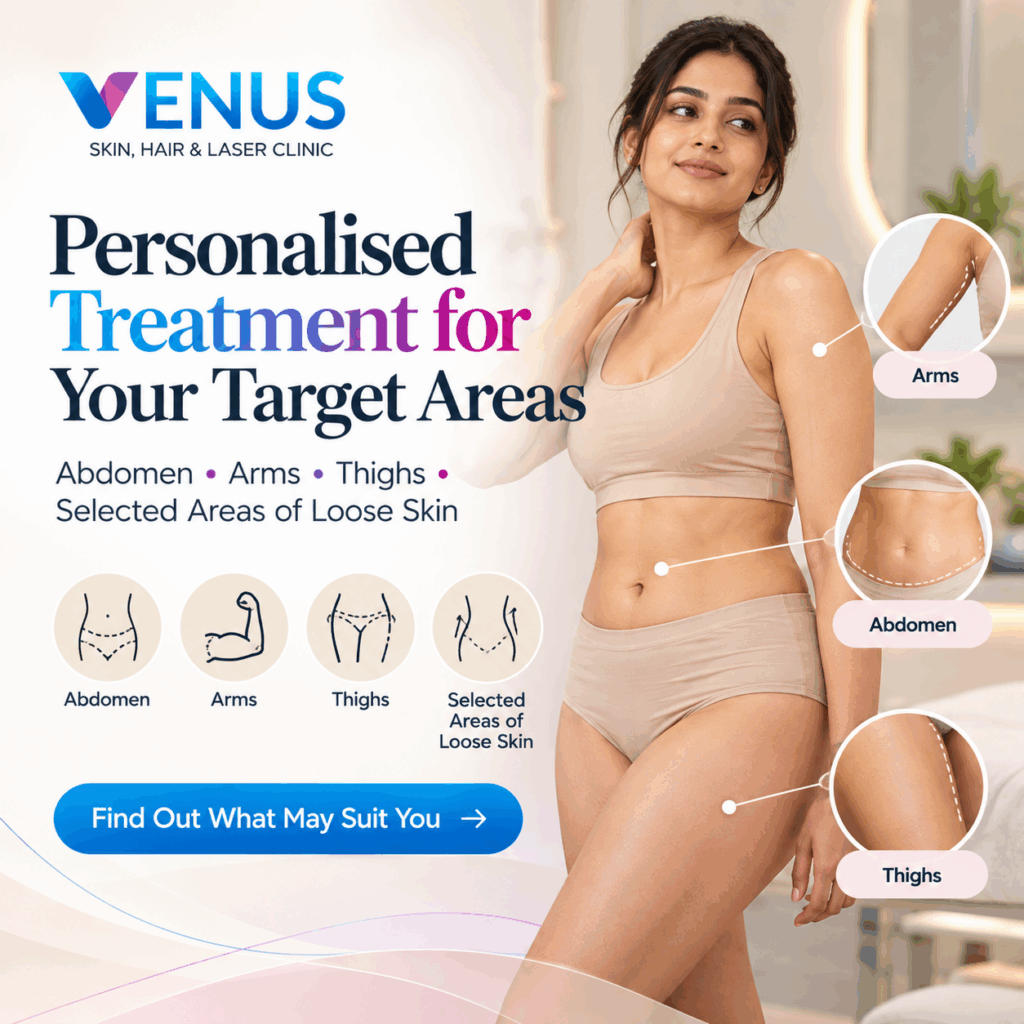
Treatment planning should begin with the area you want to improve and the reason it concerns you. The presence of localised fat, skin laxity or both can change which approach is appropriate.
The abdomen is a common area of concern for people who notice a lower-belly pouch, uneven contours or reduced skin firmness.
Body sculpting abdomen treatments may be considered for selected localised fullness, depending on the amount of subcutaneous fat and the technology available.
Concerns may include:
Body contouring stomach treatments are not a replacement for weight loss and cannot guarantee a flat abdomen. The appearance of the abdomen can also be affected by abdominal muscle separation, hernias, visceral fat and other medical or anatomical factors that non-surgical aesthetic treatments do not correct.
Pregnancy may be followed by changes in abdominal fat distribution, skin elasticity and muscle structure. Before treatment, it is important to establish whether the concern is related to localised fat, loose skin, muscle separation or another cause.
A clinician should assess suitability and timing, particularly for patients who are pregnant, breastfeeding or recovering from childbirth.
The upper arms and flanks can be affected by localised fullness and changes in skin firmness.
People seeking body contouring arms treatments may be concerned about fullness in the upper arms or skin that appears less firm, sometimes described as “bat wings.”
The appropriate approach depends on whether the main concern is fat, skin laxity or a combination. Mild laxity may be approached differently from substantial excess skin.
Flanks are the areas at the sides of the waist, often referred to as love handles. Selected localised deposits may be considered for non-surgical contouring after assessment.
Results depend on the amount of tissue being treated, the technology used and individual response. Non-surgical procedures are not equivalent to surgical fat removal.
Thigh concerns may involve the inner thighs, outer thighs or the transition between the thighs and hips.
Body contouring thighs treatments may be considered for selected localised fullness or mild skin-firmness concerns. The treatment plan depends on tissue thickness, skin elasticity and the technology’s intended treatment area.
It is important to distinguish localised fat from cellulite, which has a different underlying structure. A treatment aimed at fat reduction may not reliably resolve cellulite or loose skin.
Your consultation should clarify the expected benefit for your specific concern rather than promising a uniform change in thigh shape.
Loose skin can develop after substantial weight loss, pregnancy, ageing or repeated changes in body size.
Body contouring for loose skin may be considered when laxity is mild and the selected device is suitable for the area. Some energy-based treatments may support modest improvements in the appearance of skin firmness over time.
However, the response is limited by the amount of excess skin and the individual’s tissue characteristics.
For significant loose skin, especially following major weight loss, non-surgical treatment may provide limited improvement. Surgical options may need to be discussed with an appropriately qualified surgeon.
A realistic assessment is more useful than promising complete skin tightening from a non-invasive procedure.
Non-surgical body sculpting and surgical liposuction have different purposes, levels of intervention and recovery requirements. Neither is automatically the right choice for every patient.
| Factor | Non-surgical body contouring | Surgical liposuction |
|---|---|---|
| Procedure | Uses a device-based technique without surgical incisions | Uses a surgical procedure to remove fat through small incisions |
| Anaesthesia | Depends on the technology; some treatments do not require anaesthesia | Usually involves anaesthesia or another appropriate anaesthetic plan |
| Incisions and scars | No surgical incisions for non-invasive treatments | Small scars may remain at incision sites |
| Recovery | Often shorter, but temporary discomfort, redness or swelling may occur | Requires surgical recovery and post-operative care |
| Typical suitability | Selected localised concerns and mild skin-firmness concerns, depending on the technology | Selected patients seeking surgical fat removal |
| Skin tightening | Some technologies may offer modest improvements in skin firmness | Fat removal alone does not guarantee skin tightening |
| Extent of change | Generally more limited and device-dependent | Can provide more substantial fat removal in appropriately selected patients |
| Main limitations | Results vary; may be unsuitable for substantial fat deposits or excess skin | Involves surgical risks, recovery and potential complications |
Liposuction is a surgical procedure and should be discussed with an appropriately qualified surgeon. Non-surgical body contouring is not a guaranteed substitute for surgery, particularly when substantial fat removal or excess-skin correction is the goal.
The most appropriate option depends on your health, anatomy, treatment goals, risk tolerance and expectations.
A useful consultation should establish your goals and determine whether a non-surgical treatment is appropriate.
Explain which areas you want to improve, how long you have noticed the concern and whether your weight has changed recently.
The clinician should consider whether the concern relates primarily to localised fat, skin laxity, cellulite, muscle structure or another cause.
If treatment is appropriate, the clinician should explain the relevant technology, what it is intended to do, the likely limitations, potential risks and alternative options.
Before proceeding, confirm the device being used, treatment area, expected number of sessions, total cost and any follow-up requirements.
Any change should be assessed in the context of the treatment goal and the expected response for the particular technology. Further treatment should not be automatic; it should depend on suitability and clinical review.
Safety depends on the device, the treatment area, the energy settings, the patient’s health and the experience and training of the person performing the procedure.
Non-invasive treatments can still cause adverse effects. Depending on the technology, possible effects may include temporary redness, tenderness, swelling, bruising or discomfort. Burns, nerve-related symptoms, uneven contour changes and other complications may occur with some energy-based procedures.
Before treatment, disclose relevant medical conditions, medications, previous procedures, implants or devices in the treatment area, and any other factors the clinician asks about.
The clinician should check the device-specific contraindications and explain the warning signs that require medical attention.
Do not proceed solely because a treatment is advertised as non-surgical or non-invasive. The treatment must still be suitable for your individual circumstances.
Choosing a body-contouring clinic involves more than comparing advertisements. You should understand the technology being offered, what it is intended to achieve, the limits of treatment and whether the proposed plan is appropriate for your concern.
At Venus Skin Clinic, Nungambakkam, the consultation is an opportunity to discuss your goals, review suitable options and understand the likely costs and treatment requirements.
When comparing body sculpting clinics in Chennai, ask each clinic:
People searching for a body sculpting specialist in Chennai should prioritise appropriate qualifications, a careful assessment, accurate information and realistic expectations over promotional promises.
If you are looking for body contouring near me, body sculpting near me or non-surgical body contouring near me, Venus Skin Clinic in Nungambakkam is a local option to discuss your concerns and explore suitable treatment options.
If you are comparing options for the best body contouring near me, remember that the most appropriate treatment depends on your individual concern and clinical suitability — not a universal ranking or a single technology.
Discuss your concerns about localised fat, body shape or skin laxity with the Venus Skin Clinic team.
Venus Skin Clinic
4, Nageshwara Road, Nungambakkam, Chennai
Near Child Trust Hospital
Phone: +91 777 000 2118
[Book Your Consultation] [Call the Clinic]
Understanding the cost
For a transparent breakdown of session prices and customised treatment packages, view our dedicated guide on non-surgical body contouring cost in Chennai.
For double chin and jawline concerns
If you are seeking submental fat reduction and jawline tightening alongside body shaping, explore our HIFU double chin treatment in Chennai.
For medical weight management
For comprehensive medical weight management before targeted body sculpting, read about our dermatologist-monitored weight loss injections in Chennai.
These treatments address different concerns. A clinician can help determine whether one approach or a combination of approaches is appropriate for your goals.
 Full Body Skin Whitening Treatment in Chennai – Whole Body Lightening
 Full Body Whitening Treatment in Chennai for Brighter, Even-Toned Skin
 Skin Care Specialist in Chennai: How to Choose the Right Skin Care Specialist Hospital for Healthy, Beautiful Skin
 Non Surgical Facelift in Chennai That Actually Lifts — Not Just Improves Skin
 💉 Best Injection for Weight Loss — Transform Your Body Safely at Venus Clinic, Chennai
 Laser Hair Removal Cost in Chennai: Full Body @ ₹59,999 (Unlimited Sessions)
 🔎 How to Find the Best Skin Care Specialist in Chennai for Your Needs
 Top 10 Reasons to Visit a Skin Care Specialist in Chennai
 Why Consider Full-Body Laser Hair Removal?
 Best Skin Care Specialist Hospital in Chennai: Treatments, Expertise & Clinic Guide
 Chennai Skin Specialist Doctors List – Consult the Expert at Venus Skin Clinic
 Skin Care Specialist in Chennai: Complete Dermatologist Guide for Healthy, Problem-Free Skin
