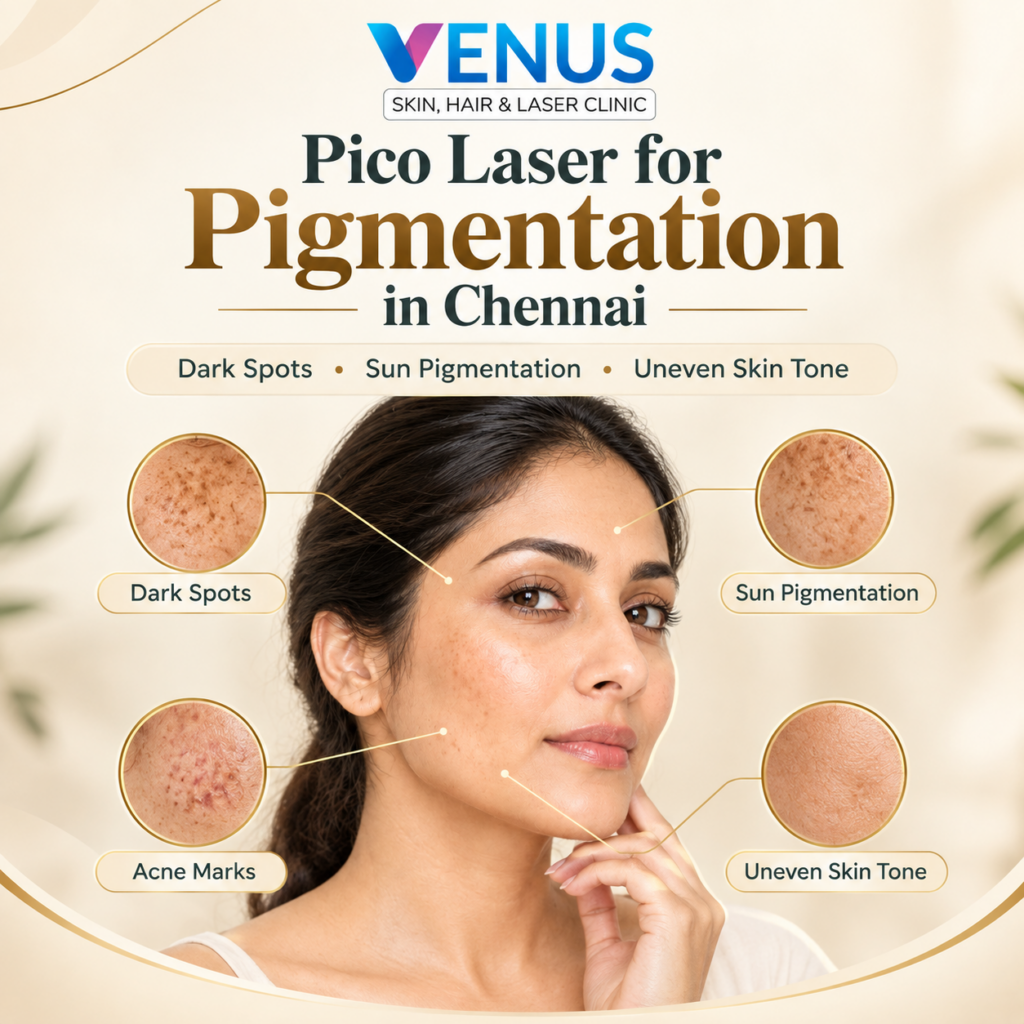
Pigmentation can appear as dark spots, uneven skin tone, acne marks, sun-induced pigmentation, or melasma. Pico laser for pigmentation uses ultra-short laser pulses to target unwanted pigment while minimizing unnecessary heat exposure to surrounding skin. At Venus Skin Clinic, treatment is planned after assessing your pigmentation type, skin tone, depth of pigment, and tendency toward pigmentation after procedures.
If creams alone are not giving you the improvement you want, a dermatologist-led assessment can help determine whether Pico Laser is appropriate for your skin.
Book a Pigmentation Consultation at Venus Skin Clinic
4, Nageshwara Road, Nungambakkam, Chennai
Near Child Trust Hospital
Call: +91 777 000 2118
Not every dark patch should be treated with the same laser settings.
Pigmentation can have different causes, including sun exposure, acne inflammation, melasma, post-inflammatory pigmentation, and other pigmentary conditions. The right treatment depends on what is causing the pigment and how deeply it sits within the skin.
Pico Laser may be considered for selected cases of:
A dermatologist should first identify the type of pigmentation before deciding whether laser treatment is suitable.
Your pigmentation diagnosis comes before your laser treatment.
Pico Laser is a laser technology that delivers extremely short pulses of energy, measured in picoseconds. These rapid pulses can help break pigment into smaller particles that the body can gradually clear.
Unlike treatments that rely primarily on prolonged heating, picosecond technology is designed to deliver energy in very short bursts. Research has evaluated picosecond lasers for several dermatological uses, including benign pigmented lesions, photodamage, melasma and scar-related concerns.
However, laser treatment is not automatically the best option for every pigmentation condition.
For example, melasma is a chronic and recurrent pigmentary disorder. Current evidence supports a more individualized approach, with topical treatments, sun protection and combination strategies often playing an important role alongside procedures.
Pico Laser delivers very short pulses of laser energy to the targeted area.
The treatment approach is designed to interact with pigment while limiting unnecessary thermal damage to surrounding tissue.
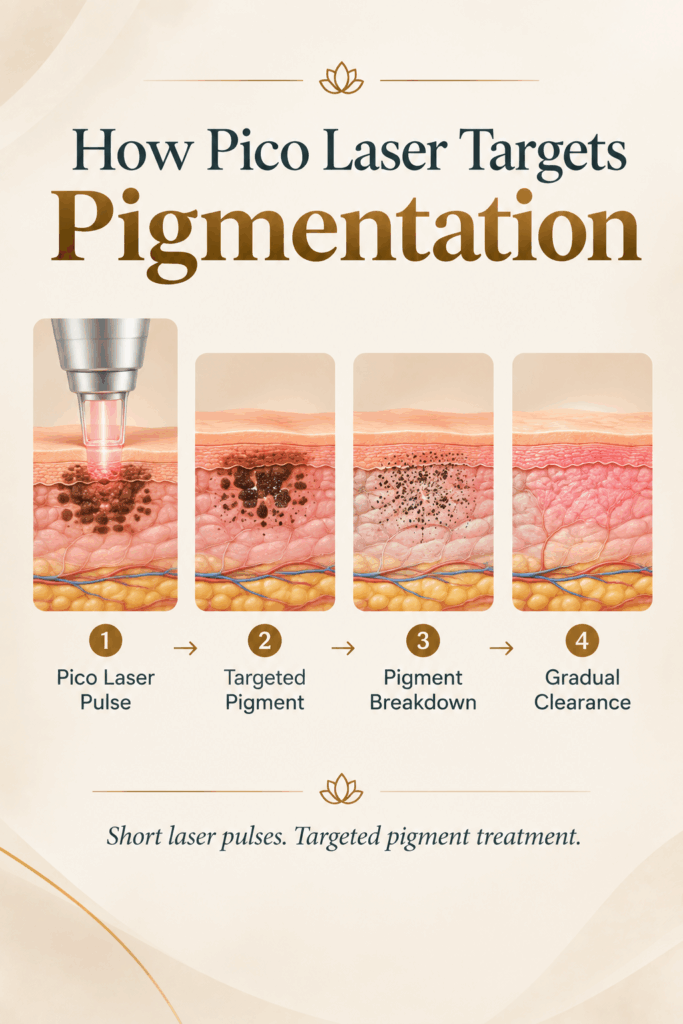
1. Skin assessment
Your dermatologist examines the pigmentation and evaluates your skin type and history.
2. Treatment planning
The wavelength, energy, spot size and treatment approach are selected according to the concern being treated.
3. Laser application
The laser is directed over the selected pigmented areas.
4. Pigment response
The targeted pigment is fragmented, after which the body’s natural processes help clear the pigment particles.
5. Gradual improvement
Pigmentation may improve progressively over a series of treatments, depending on its cause and depth.
There is no single laser setting that works equally well for every pigmentation problem. This is particularly important for darker Indian skin tones, where inappropriate laser parameters can increase the risk of unwanted pigmentary changes.
At Venus Skin Clinic, Pico Laser may be considered as part of a personalized treatment plan for selected pigmentation concerns.
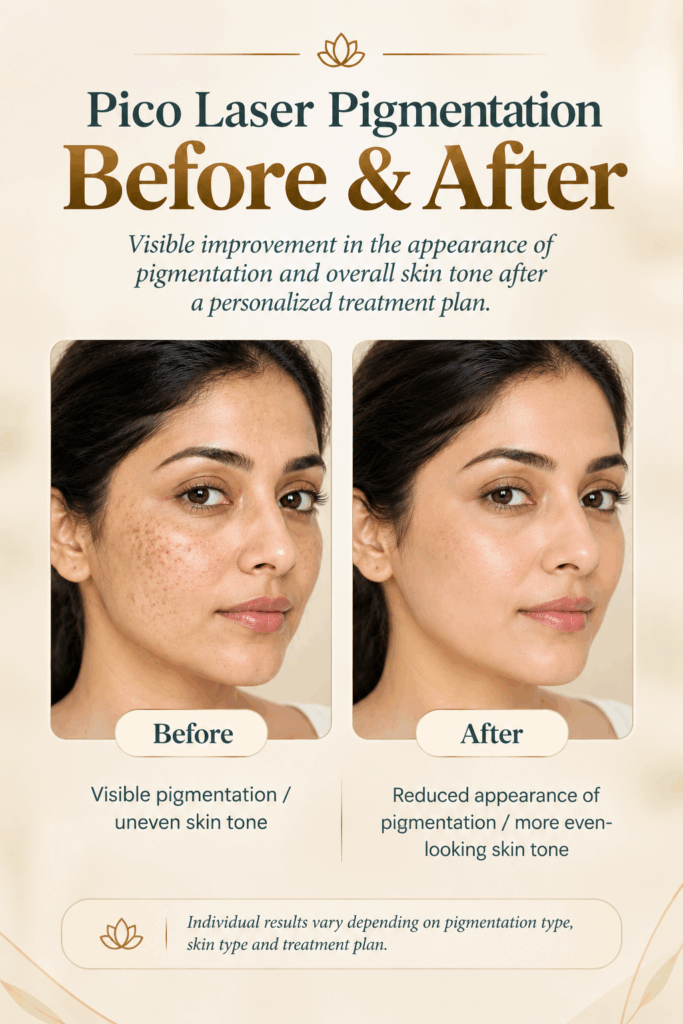
Dark marks left behind after acne can remain even after active breakouts have settled. Depending on the type and depth of pigmentation, laser treatment may be considered alongside other dermatologist-recommended approaches.
Repeated UV exposure can contribute to uneven pigmentation and visible dark spots. Treating existing pigmentation while controlling further UV exposure is important for maintaining improvement.
When pigmentation is distributed unevenly across the face, a customized treatment approach may help improve overall skin clarity and tone.
Melasma requires particular care because it is chronic and can return. Studies of picosecond lasers have reported improvement in some patients, but the evidence remains mixed and treatment should be individualized.
For melasma, Pico Laser should not be presented as a one-time permanent solution.

Removing visible pigment is only one part of pigmentation management.
Pigmentation can recur when the underlying triggers continue, such as:
This is why a good pigmentation treatment plan considers both pigment reduction and recurrence prevention.
Recent reviews emphasize that melasma is multifactorial and recurrent, and that maintenance treatment remains important after procedures.
Your treatment begins with a skin assessment rather than immediately starting the laser.
Your dermatologist may assess:
The skin is then prepared according to the treatment plan.
Protective eyewear is used, and the laser is applied to the selected areas. The sensation varies between individuals and depends on the treatment area and settings used.
Some patients may experience temporary redness, warmth, mild swelling or other short-term skin changes. Your aftercare instructions will depend on your individual treatment.
Following the recommended skincare and sun-protection routine is an important part of the result.
There is no universal number of sessions for pigmentation.
The required number depends on:
Some superficial pigmentation concerns may respond sooner, while conditions such as melasma can require a longer-term management strategy.
Your dermatologist can recommend an appropriate treatment schedule after examining your skin.
The goal is controlled improvement — not aggressive treatment simply to achieve faster results.
Laser treatment and topical skincare are not always competing choices.
| Pigmentation approach | Common role |
|---|---|
| Pigmentation creams | Help control pigment and support ongoing management |
| Sunscreen | Helps reduce UV-triggered pigmentation and recurrence |
| Chemical peels | May improve selected superficial pigmentation |
| Pico Laser | Can target selected pigmentary concerns using short laser pulses |
| Combination treatment | May be considered when multiple factors contribute to pigmentation |
For melasma in particular, evidence suggests that combination approaches can be useful, while no single modality can be considered a definitive solution for everyone.
Pico Laser results are usually assessed gradually rather than immediately.
Depending on the condition being treated, you may notice:
Results vary from person to person.
If the underlying cause of pigmentation remains active, pigmentation can return even after successful treatment. This is especially relevant to melasma, which can relapse over time.
The aim should be natural-looking improvement in pigmentation, not artificially whitening your natural skin tone.
Laser treatment on Indian skin requires careful parameter selection.
Darker skin types can be more prone to post-inflammatory hyperpigmentation after certain procedures. Recent literature continues to highlight the need for caution when using laser and light-based treatments for melasma and pigmentation, particularly because pigmentary changes can occur after treatment.
That is why treatment should be selected according to:
More laser energy does not automatically mean better pigmentation results.
Melasma, acne pigmentation and isolated pigmented spots may require different approaches.
The lowest-cost treatment is not necessarily appropriate for your skin. Diagnosis, device selection, settings and follow-up all matter.
UV exposure can contribute to pigmentation recurrence and may compromise your improvement.
Aggressive treatment can irritate the skin and potentially trigger more pigmentation in susceptible individuals.
Pigmentation is often influenced by ongoing biological and environmental triggers. Treatment should therefore be viewed as management rather than a guaranteed permanent removal.
At Venus Skin Clinic, pigmentation treatment is approached as a dermatology problem first and a cosmetic procedure second.
Your treatment plan can be based on:
Dr. Sharanya Karthik is a Cosmetic Dermatologist with over 11 years of experience, with MBBS and MD in Dermatology, Venereology & Leprosy.
The focus is on selecting an appropriate treatment strategy rather than recommending the same procedure to every pigmentation patient.
If you are searching for pico laser for pigmentation near me, choosing a clinic based only on proximity may not be enough.
Consider whether the clinic provides:
Venus Skin Clinic is located at 4, Nageshwara Road, Nungambakkam, Chennai, near Child Trust Hospital, making it accessible for patients looking for dermatologist-led pigmentation treatment in Chennai.
Book your pigmentation consultation:
+91 777 000 2118

1. Is Pico Laser good for pigmentation?
Pico Laser can be considered for selected pigmentation concerns, including certain dark spots, sun-induced pigmentation and some cases of melasma. Suitability depends on the diagnosis, skin type and pigmentation pattern. It is not a universal treatment for every type of pigmentation.
2. How many Pico Laser sessions are needed for pigmentation?
The number of sessions varies according to the type, depth and extent of pigmentation and how your skin responds to treatment. A dermatologist can recommend a treatment schedule after examining your skin.
3. Can Pico Laser permanently remove pigmentation?
Pico Laser can reduce the appearance of selected pigmentation, but permanent removal cannot be guaranteed. Pigmentation may recur when triggers such as UV exposure, inflammation or melasma-related factors continue. Long-term management and maintenance may be necessary.
If pigmentation is making your skin tone look uneven or dark spots are not improving with your current skincare routine, a professional assessment can help determine the cause and the most appropriate treatment.
Venus Skin Clinic
4, Nageshwara Road, Nungambakkam, Chennai
Near Child Trust Hospital
Call: +91 777 000 2118
Book Your Consultation Today
 Is Pico Laser Safe for Indian Skin Tones? How to Prevent Post-Laser Pigmentation
 How Many Pico Laser Sessions Are Needed for Pigmentation? Cost & Treatment Timeline in Chennai
 Pico Laser vs Chemical Peels for Pigmentation: Which Is Best for Your Skin?
 Melasma vs. Post-Acne Dark Spots: Which Pigmentation Type Can Pico Laser Treat?
 Does Laser Hair Removal Cause Pigmentation? Dermatologist Explains
 Pigmentation Treatment in Chennai: Why Creams Alone Don’t Work
 Pigmentation Treatment Chennai for Clearer, Even-Toned Skin
 Professional Skin Care Clinic Treatments in Chennai for Acne, Pigmentation & Anti-Aging
 Pigmentation Treatment in Chennai at Venus Skin Clinic: Achieve Glowing, Even Skin Tone
 Facial Laser Hair Removal in Chennai
 Finding the Best Laser Hair Removal Services in Chennai
 How Many Sessions Are Needed for Laser Hair Removal in Chennai?
