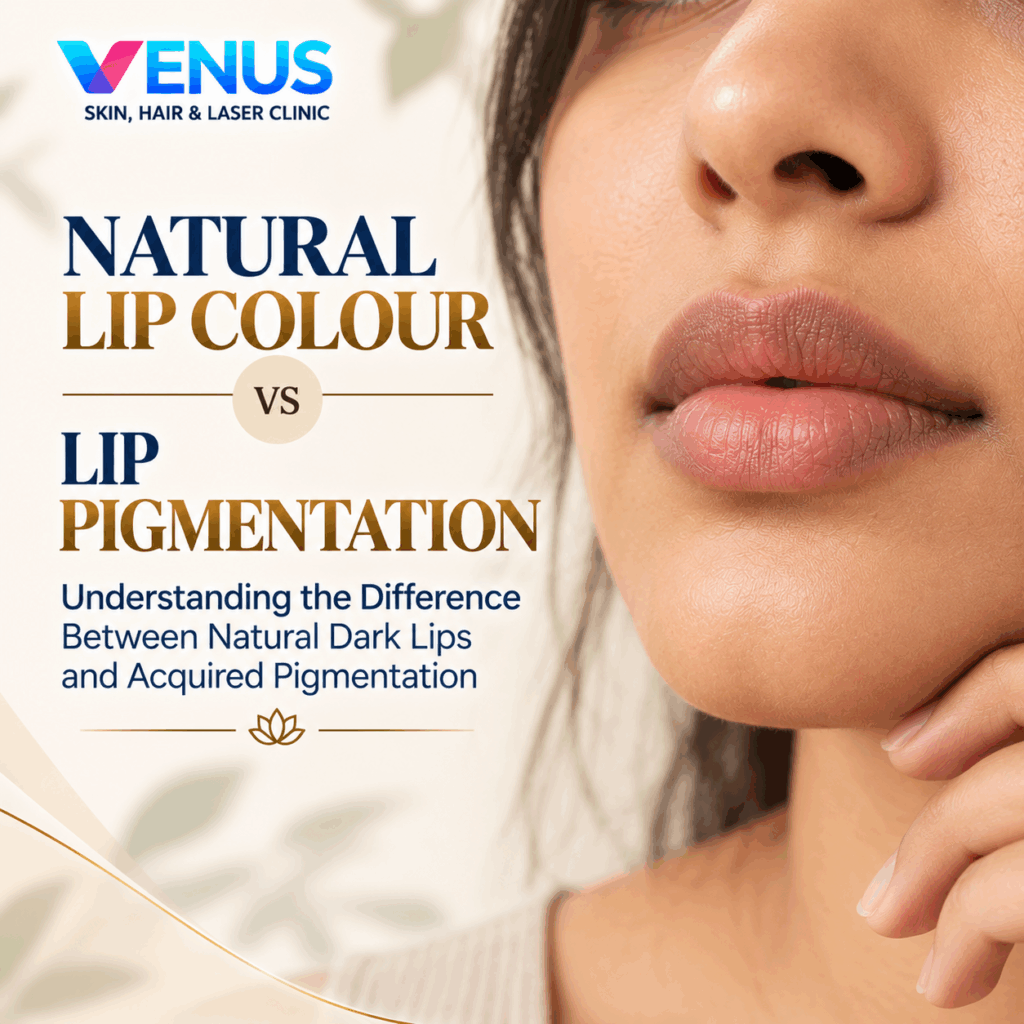
Not everyone’s lips have the same natural colour. Some people naturally have light pink lips, while others have brown, reddish-brown or deeper-toned lips. These differences are normal and are often influenced by genetics and natural melanin levels.
However, if your lips have gradually become darker, developed uneven patches or changed colour unexpectedly, you may wonder whether it is natural pigmentation or acquired lip pigmentation.
Understanding the difference is important because naturally darker lips do not necessarily require treatment, whereas new or unusual colour changes may need dermatological evaluation.
In this guide, we explain how natural lip colour differs from acquired pigmentation, what can cause changes in lip colour and when you should consider consulting a dermatologist.
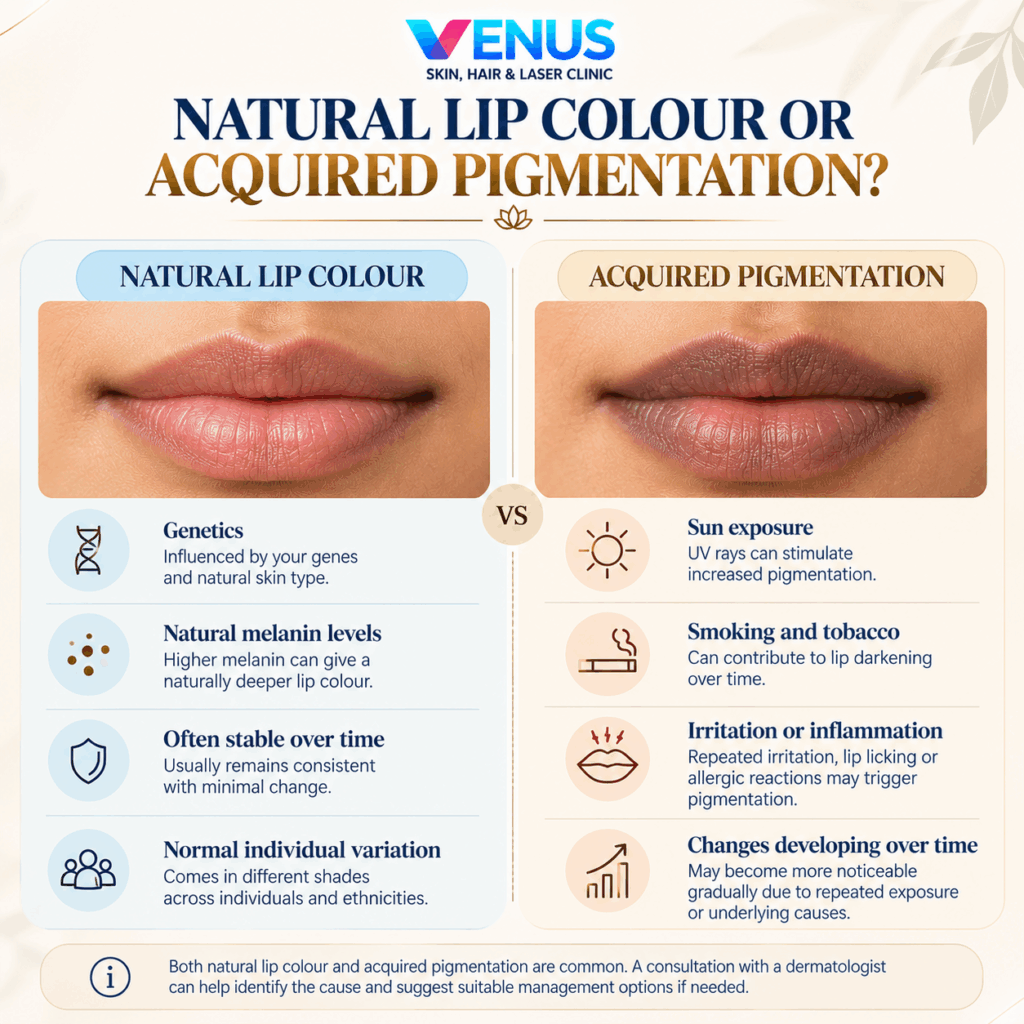
Yes. Naturally darker lips are completely normal.
Lip colour varies from person to person because of differences in melanin, genetics and natural pigmentation. Melanin is the pigment responsible for the colour of your skin, hair and certain mucosal tissues.
People with naturally higher melanin levels may have lips that appear brown, deep pink, reddish-brown or darker than the surrounding facial skin.
Natural lip pigmentation may:
Be present since childhood or adolescence.
Run in families.
Appear relatively consistent over time.
Affect both lips in a broadly similar way.
Occur without pain, itching or irritation.
The natural shade of your lips is not a reliable indicator of skin health or overall health.
Important: Naturally dark lips are not a medical problem simply because they are darker than someone else’s. Treatment is not medically necessary unless there is a separate concern that needs evaluation.
Lip pigmentation refers to an increase or change in colour that develops due to various factors affecting the lips.
The change may involve increased melanin production, inflammation, irritation, sun exposure, certain medications or other underlying conditions.
Unlike naturally darker lip colour, acquired pigmentation may develop after a period of having a different lip shade.
Common contributing factors include:
Sun exposure: Repeated ultraviolet exposure may contribute to pigmentation changes.
Smoking and tobacco: Tobacco use can be associated with increased pigmentation of the lips and oral tissues.
Lip product irritation: Certain ingredients in lipsticks, balms and cosmetic products may trigger irritation or allergic reactions.
Repeated inflammation: Chronic dryness, lip licking, biting or irritation may contribute to post-inflammatory pigmentation.
Medications: Certain medicines may cause pigmentation changes in some individuals.
Underlying conditions: Some medical conditions may also be associated with changes in lip colour.
The appearance of pigmentation alone cannot establish its cause. A dermatologist may need to review your history and examine the lips before recommending treatment.
Although both can make lips appear darker, there are some differences that may help you understand what you are noticing.
| Feature | Natural lip colour | Acquired lip pigmentation |
|---|---|---|
| Onset | Often present from an early age | Develops or changes over time |
| Main influence | Genetics and natural melanin | Multiple possible contributing factors |
| Appearance | May be relatively consistent | May appear uneven, patchy or diffuse |
| Family history | May be seen in family members | Not necessarily associated with family history |
| Changes over time | Often remains relatively stable | May change, spread or become more noticeable |
| Treatment | Usually not medically necessary | Depends on the underlying cause |
These are general observations, not diagnostic rules. Some naturally occurring pigmentation can be uneven, and acquired pigmentation can affect larger areas of the lips.
A clinical assessment is the best way to distinguish between normal pigmentation and a new pigmentation disorder.
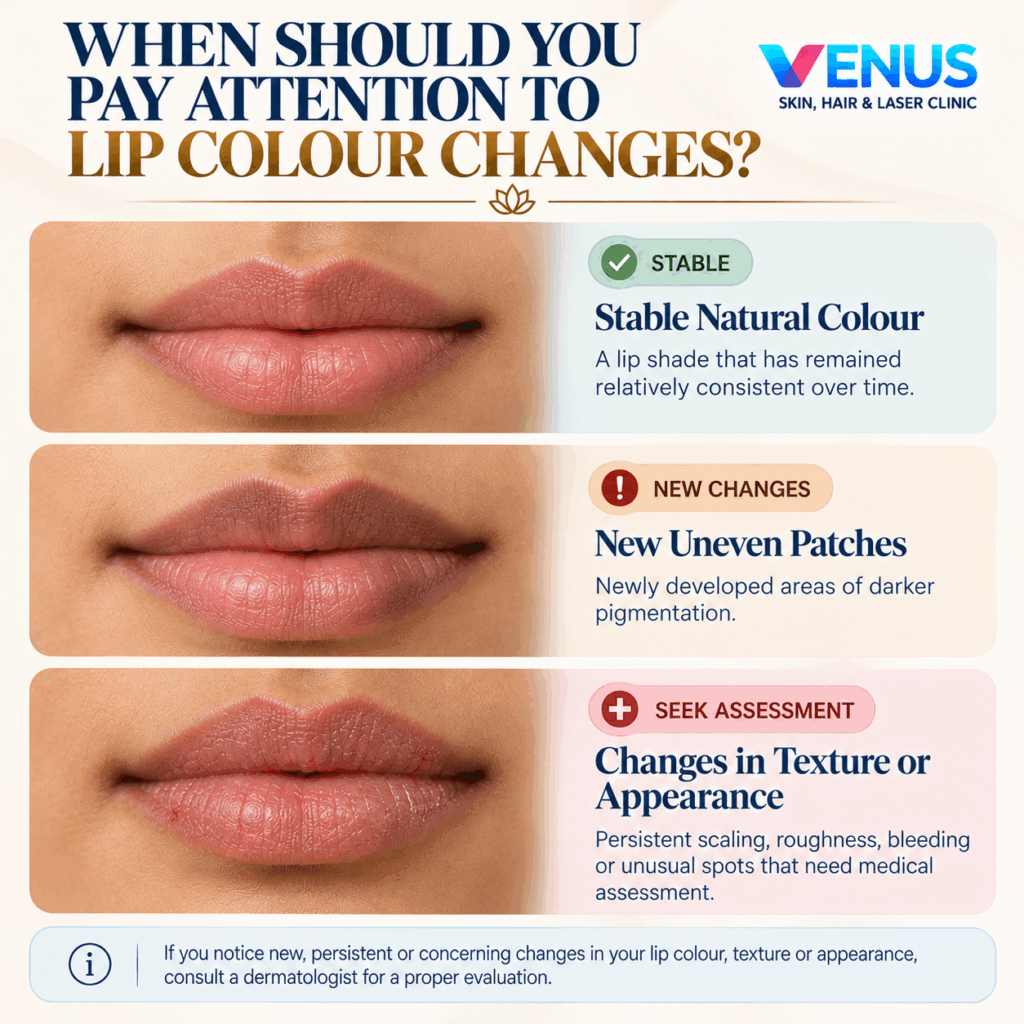
If your lips were previously a different shade and you have noticed a change, pay attention to the pattern and timing.
A gradual change in lip colour may be associated with repeated sun exposure, smoking, irritation or other factors.
Compare your current lip appearance with older photographs if you are unsure when the change began.
A newly developed brown or black spot on the lip should not automatically be assumed to be ordinary pigmentation.
A dermatologist can assess whether it is a benign pigmented lesion or something that requires further investigation.
If certain areas of your lips appear noticeably darker than others, possible contributing factors include local irritation, inflammation and other pigmentary changes.
However, uneven colour can also be a natural variation.
Repeated dryness, allergic reactions, lip licking or exposure to irritating products may cause inflammation.
In some individuals, inflammation can be followed by post-inflammatory pigmentation.
Persistent dryness, cracking, roughness or scaling should not simply be treated as a cosmetic pigmentation issue.
Chronic sun damage and inflammatory lip conditions can cause changes in both colour and texture.
A spot that becomes larger, changes shape or develops an unusual appearance should be examined by a dermatologist.
Do not attempt to lighten a changing spot with home remedies or cosmetic products before getting it assessed.
Natural lip colour is influenced by several factors.
Genetics play an important role in determining natural skin and lip pigmentation. If your family members have naturally darker lips, you may have a similar pigmentation pattern.
Melanin gives colour to the skin and contributes to the appearance of the lips. Differences in melanin distribution can result in different natural lip shades.
Natural pigmentation varies across individuals and populations. Brown or darker lip tones can be completely normal and do not automatically indicate a skin condition.
Pigmentation patterns may change over time. Hormonal influences and other individual factors can also contribute to changes in pigmentation in some people.
If your lips have become darker compared with their previous appearance, several factors may be involved.
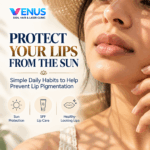
Repeated UV exposure can contribute to pigmentation changes and damage to the lip surface. Daily protection with an SPF lip balm can help reduce unnecessary UV exposure.
Read our guide on how to prevent lip pigmentation from sun exposure.
Smoking and tobacco use are associated with pigmentation changes in the lips and oral tissues. The extent of pigmentation can vary between individuals.
Certain lipsticks, lip balms, fragrances and other cosmetic ingredients can cause irritation or allergic reactions.
Repeated inflammation may lead to pigmentation changes in susceptible individuals.
Repeatedly licking, biting or picking the lips can damage the protective barrier and contribute to irritation.
Persistent inflammation may result in darker areas after the irritation settles.
Some medications and underlying health conditions may be associated with pigmentation changes. If lip darkening develops after starting a medicine, discuss it with your prescribing doctor rather than stopping the medicine yourself.
Naturally darker lips do not necessarily need to be lightened.
If your lip colour is genetic or part of your natural pigmentation pattern, there may be no medical reason to change it.
If you are concerned about your lip appearance for cosmetic reasons, a dermatologist can explain what may or may not be achievable and discuss the risks of treatment.
It is important to have realistic expectations. Treatments cannot guarantee a particular shade of pink or completely change your natural pigmentation.
In some cases, acquired lip pigmentation can be managed or improved, depending on its cause.
The first step is identifying why the colour change has occurred.
A dermatologist may consider:
Reviewing your medical and medication history.
Identifying possible irritation or allergic reactions.
Assessing the pattern and duration of pigmentation.
Recommending suitable lip care and sun protection.
Discussing dermatologist-guided treatment options when appropriate.
Certain procedures or topical treatments may be considered for selected cases, but not every pigmentation pattern is suitable for treatment.
Treating the wrong cause or using aggressive products on the lips may worsen irritation and pigmentation.
For an assessment of persistent lip pigmentation, explore lip pigmentation treatment in Chennai at Venus Skin Clinic.
Consider a dermatological assessment if you notice:
New or unexplained dark patches on your lips.
Gradual or sudden changes in lip colour.
Pigmentation that continues to spread or change.
Persistent dryness, scaling or cracking.
A dark spot that changes in size, shape or appearance.
Pigmentation accompanied by pain, bleeding or a persistent sore.
A new or changing pigmented spot should be examined rather than assumed to be harmless.
If your lips suddenly become blue or grey, especially with breathlessness, chest pain or dizziness, seek emergency medical attention. This is different from ordinary melanin-related pigmentation.
 Hydrafacial vs Regular Facials: What’s the Real Difference?
 Acne Scars vs. Acne Marks: What’s the Difference & How to Treat Them
 Skin Whitening vs Skin Brightening: What’s the Difference?
 The Truth About Permanent Hair Removal at Home: Why Natural Remedies Don’t Work
 Hair Transplant Clinic in Chennai – Natural Results, Expert Care
 Hair Transplantation Clinic in Chennai – Regain Your Confidence with Natural Results
 Anti-Aging Treatment Doctors In Chennai: Treatments That Deliver Natural-Looking Results
 Achieve Clearer Skin: Natural Remedies & Expert Care for Acne Scars at Venus Skin Clinic
 How to Prevent Lip Pigmentation from Sun Exposure
 Benefits of Cosmelan Peel for Pigmentation
 Pico Laser for Pigmentation in Chennai
 Pigmentation Treatment in Chennai: Why Creams Alone Don’t Work
