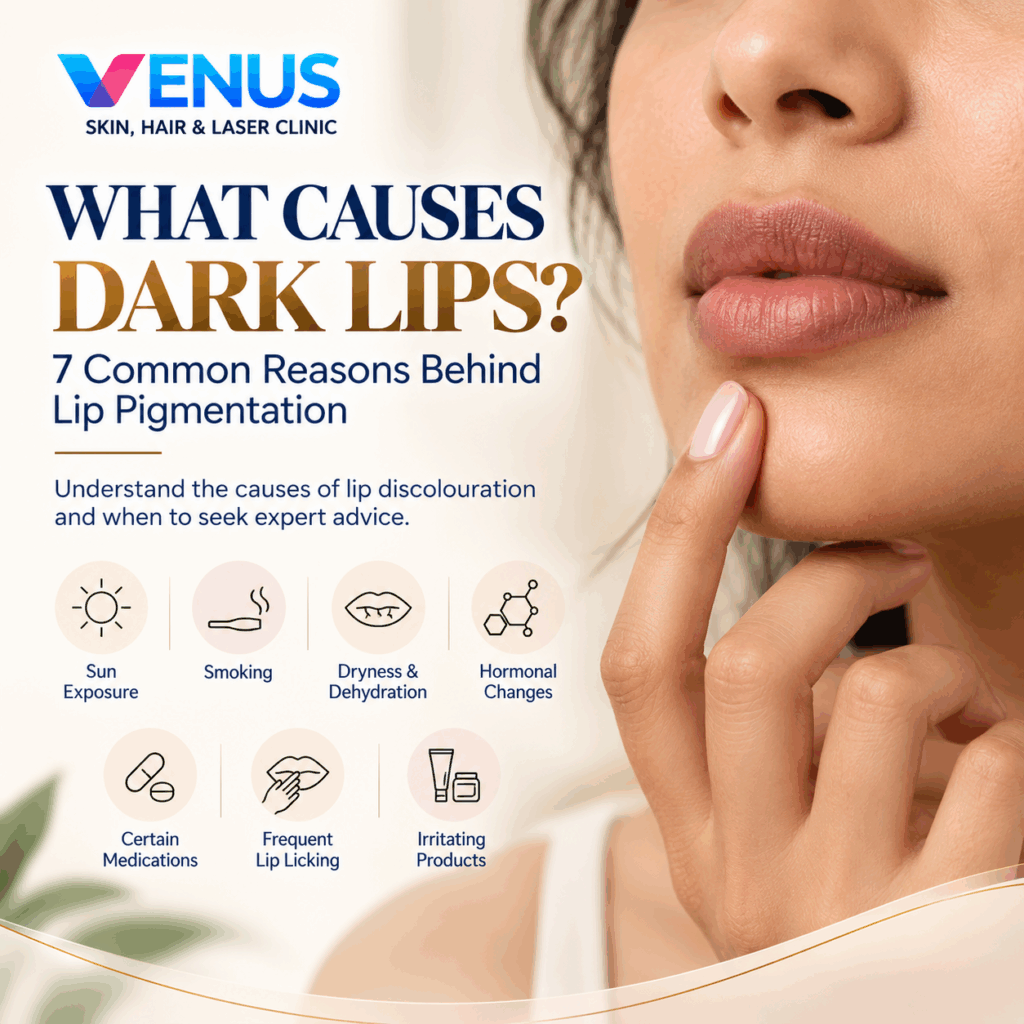
Have you noticed that your lips are becoming darker, developing uneven patches or gradually changing colour? Lip darkening can happen for several reasons, ranging from natural genetic pigmentation to sun exposure, smoking, irritation and certain medications.
While naturally darker lips are completely normal, a noticeable change in lip colour may sometimes indicate irritation, inflammation or another underlying concern.
Understanding what causes dark lips is the first step towards choosing the right care. In this guide, we explain seven common reasons for lip pigmentation, ways to protect your lips and when you should consider consulting a dermatologist.
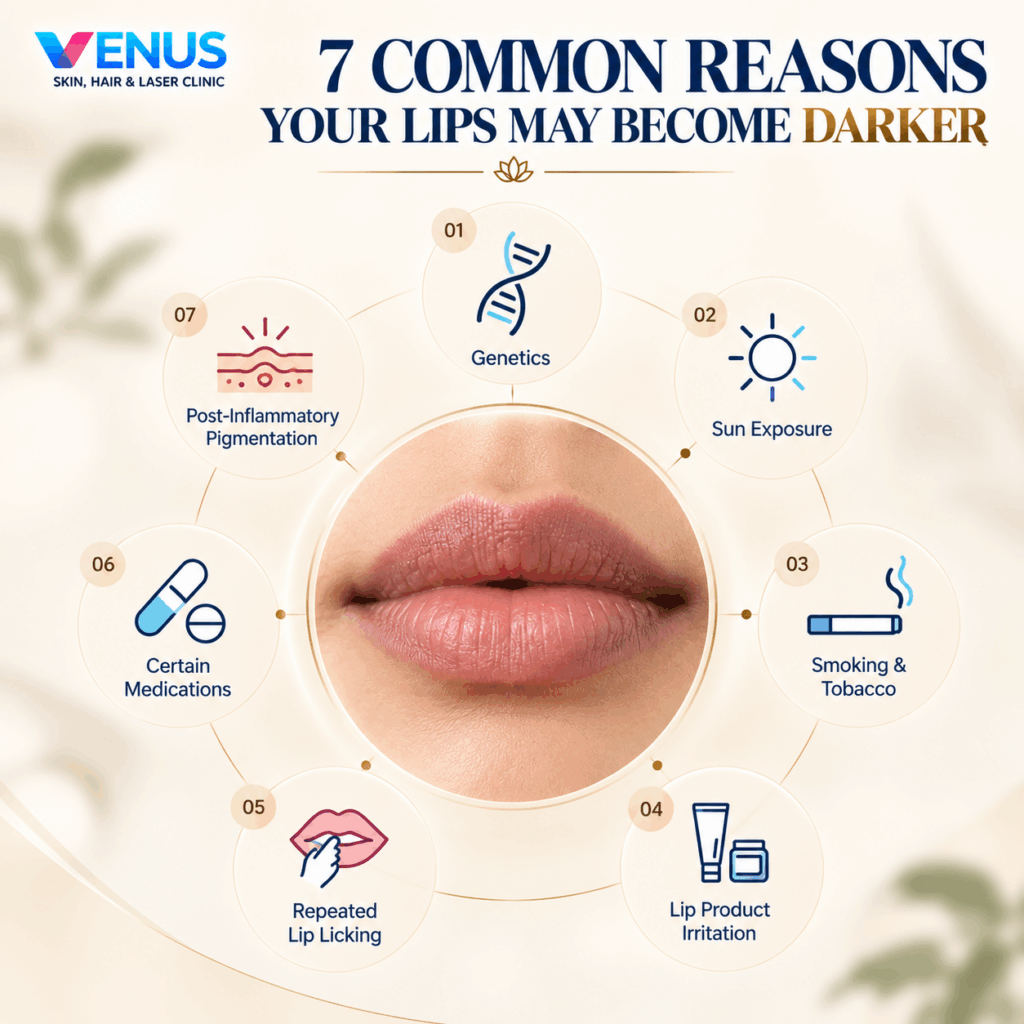
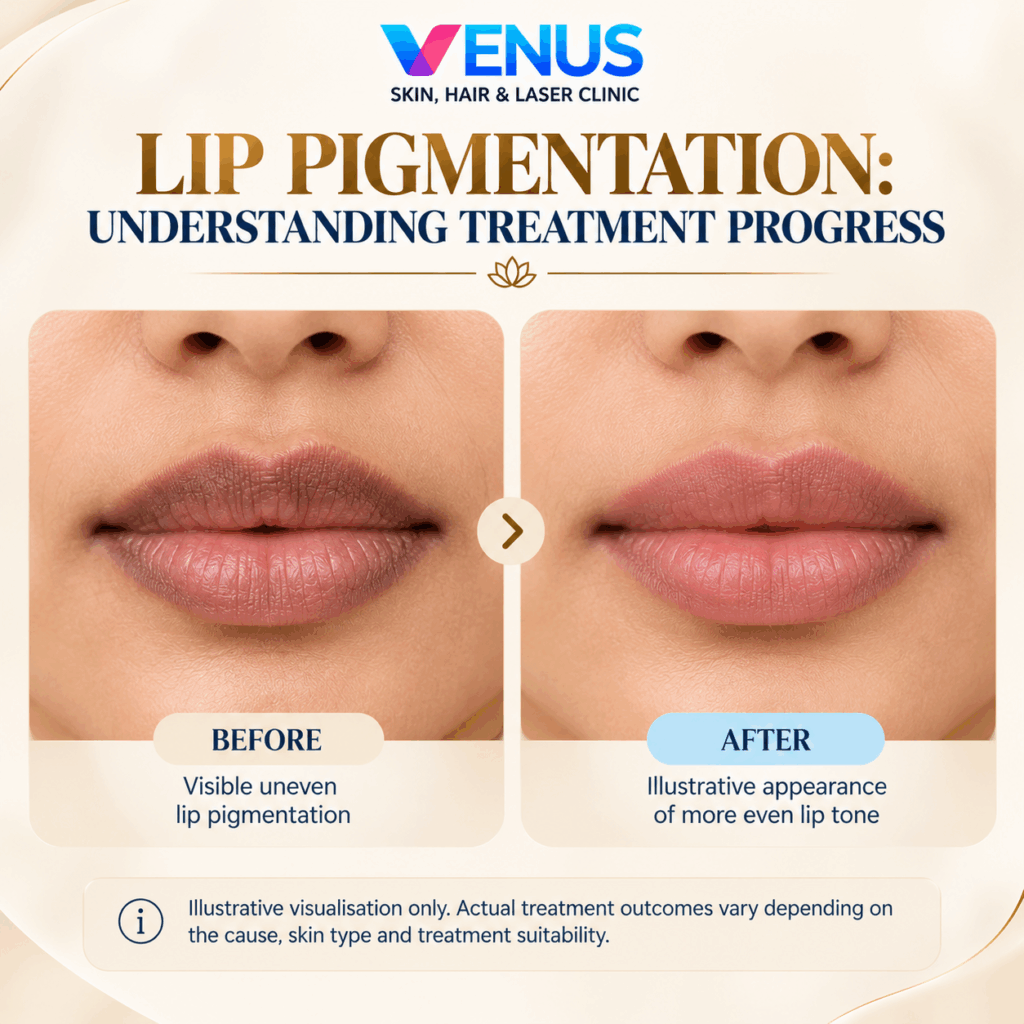
Dark lips can develop when melanin, the natural pigment responsible for skin and lip colour, becomes more concentrated in certain areas. However, not every change in lip colour is caused by excess melanin.
Common reasons for dark lips include:
Genetics and natural pigmentation.
Excessive sun exposure.
Smoking and tobacco use.
Irritation from lip products.
Repeated lip licking, biting or inflammation.
Certain medications.
Post-inflammatory pigmentation and other medical conditions.
The underlying cause can differ from one person to another. Therefore, identifying the reason for the colour change is more important than trying random lip-lightening products.
Genetics is one of the reasons some people naturally have darker lips than others.
Melanin production varies between individuals and contributes to differences in natural skin and lip colour. Some people naturally have pinkish lips, while others have brown, reddish-brown or deeper-toned lips.
This variation is normal and does not automatically indicate a skin problem.
What should you know?
Naturally darker lips do not necessarily require treatment.
Natural lip colour can vary between individuals.
Both upper and lower lips may have different natural shades.
Treatment should not be recommended simply because someone’s natural lip colour is darker.
If your lip colour has remained relatively consistent over time and there are no other symptoms, it may simply reflect your natural pigmentation.
Prolonged exposure to ultraviolet (UV) radiation can contribute to pigmentation changes in exposed areas, including the lips.
The lips have a delicate protective barrier and can be affected by environmental exposure. Repeated sun exposure may contribute to uneven pigmentation in susceptible individuals.
Signs you may notice:
Darkening that develops gradually.
Uneven lip colour.
Pigmented areas becoming more noticeable after prolonged sun exposure.
Dryness or irritation alongside colour changes.
How can you protect your lips?
Use a broad-spectrum lip balm with SPF 30 or higher.
Reapply according to the product instructions, particularly after eating, drinking or wiping your lips.
Use additional sun protection when spending extended periods outdoors.
Avoid picking or irritating dry lips.
Consistent sun protection is an important part of maintaining lip health and preventing further sun-related damage.
Smoking and tobacco use can contribute to darkening of the lips and oral tissues.
Tobacco exposure may influence pigmentation through repeated irritation and changes in melanin production. The degree of pigmentation varies between individuals and depends on several factors.
Possible signs include:
Gradual darkening of the lips.
Uneven brown or darker patches.
Pigmentation around areas exposed to tobacco.
Changes in the appearance of the surrounding oral tissues.
Quitting smoking and avoiding tobacco are important steps towards reducing continued exposure.
However, stopping tobacco use does not guarantee that existing pigmentation will disappear completely. Persistent colour changes should be assessed by a qualified healthcare professional.
Lipsticks, lip balms, glosses, fragrances, flavourings and other cosmetic ingredients can sometimes cause irritation or allergic reactions.
This condition may be called contact cheilitis, which refers to inflammation of the lips caused by contact with an irritant or allergen.
Repeated inflammation can sometimes leave behind darker pigmentation even after the initial irritation improves.
Common symptoms may include:
Dry or flaky lips.
Redness around the lip border.
Itching or burning.
Cracking or swelling.
Gradual brown or dark discolouration.
Some people may develop pigmented contact cheilitis, where pigmentation persists following an inflammatory reaction.
What can you do?
Stop using a product that appears to trigger irritation.
Avoid frequently switching between multiple lip products.
Choose simple, fragrance-free lip care products when appropriate.
Avoid applying harsh exfoliants or unverified home remedies.
Seek medical advice if symptoms persist or repeatedly return.
A dermatologist may assess the products you use and consider allergy testing when appropriate.
Frequently licking, biting or picking your lips can damage their protective barrier.
Saliva, repeated friction and mechanical irritation may contribute to dryness and inflammation. In some individuals, repeated inflammation can be followed by post-inflammatory hyperpigmentation.
This means the lips may appear darker after the original irritation has settled.
Habits that may contribute include:
Frequently licking the lips.
Biting or peeling dry skin.
Pulling off flakes or scabs.
Using harsh scrubs on the lips.
Repeated exposure to irritating products.
How to protect your lips:
Avoid licking or biting your lips.
Use a gentle, suitable moisturising lip balm.
Avoid scrubbing or peeling the lip surface.
Allow irritated areas to recover.
Seek medical advice if cracking, inflammation or pigmentation continues.
If the lips remain inflamed, identifying and treating the underlying cause is more important than trying to lighten the affected area.
Some medications can cause pigmentation changes involving the skin or oral tissues.
The likelihood and appearance of medication-related pigmentation depend on the specific medicine, dosage, duration of use and individual response.
Certain antimalarial medicines, some antibiotics and particular cancer treatments are among the medication groups associated with pigmentation changes.
What should you do?
If you notice new lip or oral pigmentation after starting a medication:
Make a note of when the colour change began.
Inform the doctor who prescribed the medication.
Do not stop prescribed medication without medical advice.
Seek a dermatological assessment if the pigmentation persists or changes.
A doctor can assess whether the medication may be contributing to the pigmentation and discuss appropriate next steps.
Not all dark lips are caused by lifestyle habits or natural pigmentation.
Inflammation, certain skin conditions and some systemic medical conditions can also be associated with changes in lip or oral pigmentation.
Post-inflammatory hyperpigmentation may develop after irritation, allergic reactions or other inflammatory conditions.
In some cases, pigmentation may be associated with hormonal, endocrine or other medical conditions. These possibilities should not be assumed from lip colour alone.
When should you be concerned?
Consider medical assessment if you notice:
New or rapidly changing pigmentation.
A dark patch that grows or changes in appearance.
Persistent sores, bleeding or thickening.
Pigmentation accompanied by unexplained symptoms elsewhere.
Sudden blue or purple discolouration, particularly with breathing difficulty, chest pain or dizziness.
Sudden blue or purple lips with breathing difficulty or chest pain require urgent medical attention.
A dermatologist or appropriate healthcare professional can assess the appearance, history and associated symptoms to determine whether further investigation is necessary.
Although not every cause of lip pigmentation can be prevented, a few everyday habits can help protect the lips.
Choose a broad-spectrum lip balm with SPF 30 or higher and reapply as directed. Sun protection is particularly important when spending time outdoors.
Reducing and ideally stopping tobacco exposure can help prevent continued irritation and tobacco-associated pigmentation.
Avoid products that repeatedly cause burning, itching, swelling or dryness. Fragrance-free formulations may be preferable for people with sensitive lips.
Lemon juice, abrasive scrubs and strong exfoliating ingredients can irritate the delicate lip surface. Irritation may worsen rather than improve pigmentation.
These habits can damage the protective lip barrier and contribute to ongoing inflammation.
If dryness, cracking, itching or discolouration continues, consult a dermatologist instead of repeatedly changing products.
Treatment depends on why the lips have become darker.
Naturally pigmented lips may not require treatment. If pigmentation is associated with sun exposure, irritation, inflammation or medication, the first step is to identify and address the contributing factor.
Depending on the diagnosis, a dermatologist may consider:
Appropriate lip care and sun protection.
Management of allergic or irritant contact reactions.
Treatment of an underlying inflammatory condition.
Selected prescription treatments where appropriate.
Specialist procedures for carefully assessed cases of persistent pigmentation.
Not every person is suitable for cosmetic procedures, and no treatment can guarantee a particular natural lip colour.
If you are concerned about persistent dark lips, explore lip pigmentation treatment at Venus Skin Clinic to understand the available assessment and treatment options.
Consider a dermatology consultation if:
Your lips have become noticeably darker without an obvious reason.
Pigmentation continues to increase.
You have persistent dryness, itching or inflammation.
Dark patches are uneven or changing.
Home care has not helped.
You are considering a cosmetic procedure for lip pigmentation.
A dermatologist can examine the lips, understand your medical and product-use history and identify whether the pigmentation is natural, inflammatory or associated with another condition.
 Top 10 Reasons to Visit a Skin Care Specialist in Chennai
 Common Skin Problems Seen in Chennai’s Climate
 Common Inflammatory & Autoimmune Skin Conditions: Causes, Symptoms & Treatments
 Conquering Common Skin Concerns: Solutions Offered by a Leading Skin Care Clinic in Chennai
 Best Hair Care Clinics in Chennai: PRP, GFC, Mesotherapy & More Explained
 Why Underarms Become Dark in Indian Skin (And How to Fix It Safely)
 Shaving vs Waxing vs Laser: Which One Causes Dark Underarms?
 Glutathione Treatment in Chennai: Benefits, Cost & Results Explained
 💰 GFC Hair Treatment Cost in Chennai – Price, Packages & Factors Explained
 ✨ Chemical Peel for Dark Circles in Chennai – Wake Up to Brighter Eyes
 Best Underarm Whitening Treatment in Chennai: Safe, Dermatologist-Approved Solutions for Dark Underarms
 Melasma vs. Post-Acne Dark Spots: Which Pigmentation Type Can Pico Laser Treat?
